Service
Indoor Air Quality
Tight, well-built mountain homes hold heat beautifully — and hold in dry, stale air just as well. We install humidification, filtration and fresh-air ventilation that make a high-altitude home healthier and more comfortable to live in.
Mountain air is dry, and a tightly built home at altitude concentrates that dryness indoors — you feel it as static, dry skin, cracked wood trim and restless sleep. Whole-home humidification adds moisture back into the air in a controlled way, so the home feels more comfortable and finishes and furnishings hold up better through a long, dry winter.
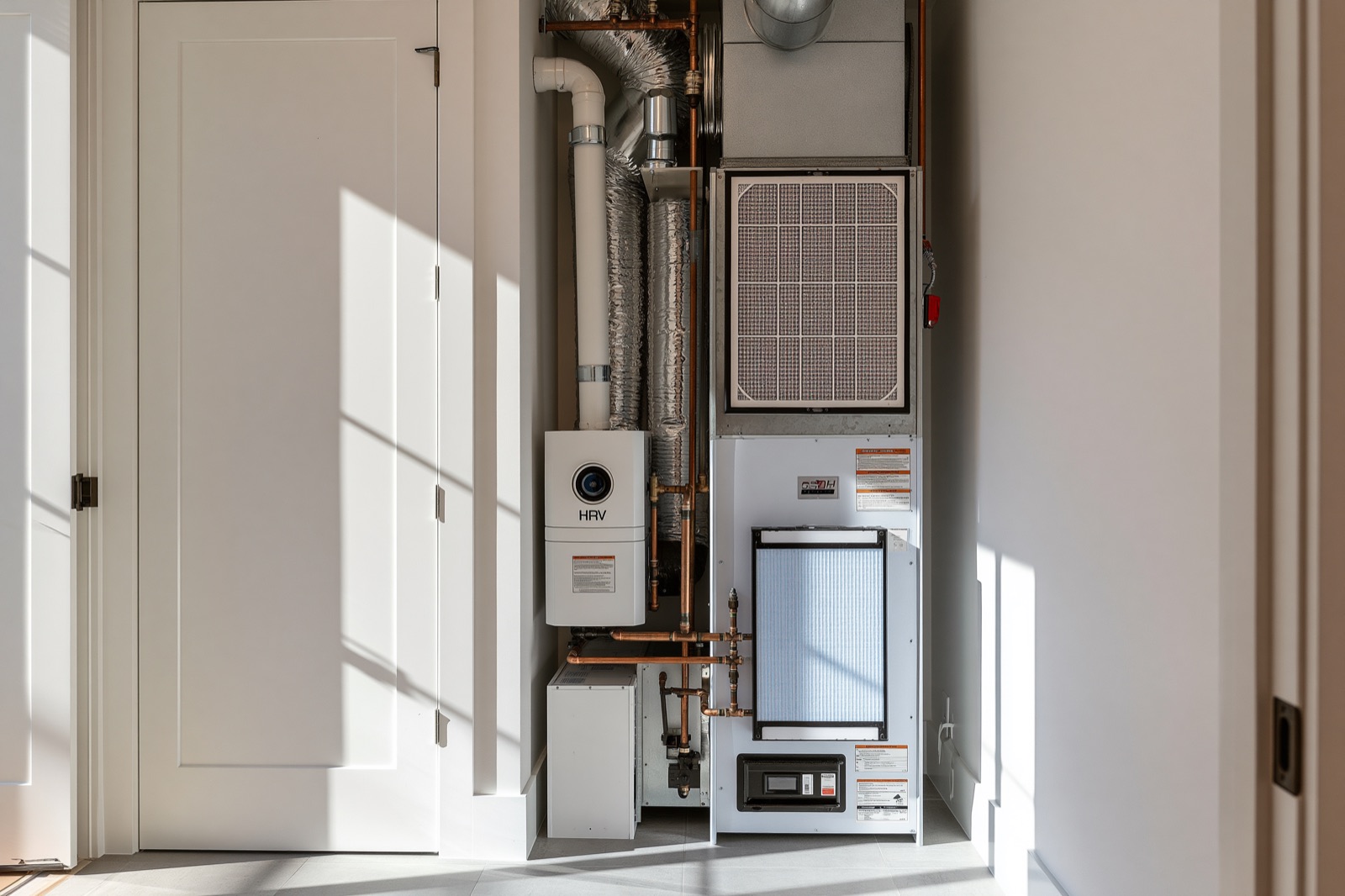
The same tight construction that makes a modern home efficient also seals in stale air, cooking odors and everyday indoor pollutants. A heat- or energy-recovery ventilator (HRV or ERV) brings a steady supply of fresh outdoor air into the home and exhausts stale air, while recovering most of the heat so you are not throwing away energy to breathe fresh air.
Filtration is the third piece. High-efficiency filtration and air purification integrated with your heating and cooling system captures dust, pollen and finer particles as air circulates, which matters even more during wildfire-smoke season when outdoor air quality drops.
Air quality works best when it is balanced and designed as a system rather than bolted on. We evaluate how your home breathes and design humidification, filtration and ventilation to work together with your heating and cooling — quietly, in the background, without you having to think about it.
If your home feels dry, stuffy or dusty, or you are building new and want to get the air right from the start, reach out and we will put together a plan.
Indoor Air Quality
- Whole-home humidification for dry mountain air
- High-efficiency air filtration and purification
- Fresh-air ventilation (HRV / ERV) for tight homes
- Balanced ventilation design
- Filtration integrated with heating and cooling
- Indoor air quality assessments
Good to know
Indoor Air Quality — questions & answers
Why is indoor air so dry in mountain homes?
High elevations have naturally dry air, and heating that air in winter dries it out further. In a tightly built home the result is very low indoor humidity, which shows up as static, dry skin, cracking wood trim and uncomfortable sleep. Whole-home humidification adds moisture back in a controlled, balanced way.
What is an HRV or ERV, and do I need one?
An HRV (heat-recovery ventilator) or ERV (energy-recovery ventilator) brings fresh outdoor air into a tightly sealed home and exhausts stale air, while recovering most of the heat so you do not waste energy. Newer, well-sealed homes especially benefit, because they do not naturally exchange air the way older, leakier homes do.
Can better filtration help during wildfire smoke season?
Yes. High-efficiency filtration and air purification integrated with your heating and cooling system capture fine particles as air circulates, which helps keep indoor air cleaner when outdoor air quality drops during smoke events. We can recommend the right level of filtration for your home.
Explore more
Related services
Boilers & Radiant Heat
High-efficiency boilers and in-floor hydronic radiant — the quiet, even warmth mountain homes are built around.
Learn moreSnowmelt Systems
Heated driveways, walkways and patios that stay clear and safe through every storm.
Learn moreHeating & Furnaces
Forced-air furnaces and heating systems sized and tuned for high-altitude performance.
Learn moreWhere we work
Areas we serve
Let's talk
Ready to talk about indoor air quality?
Reach out and we'll get you scheduled — for a repair, a new system, or a plan to keep everything running.